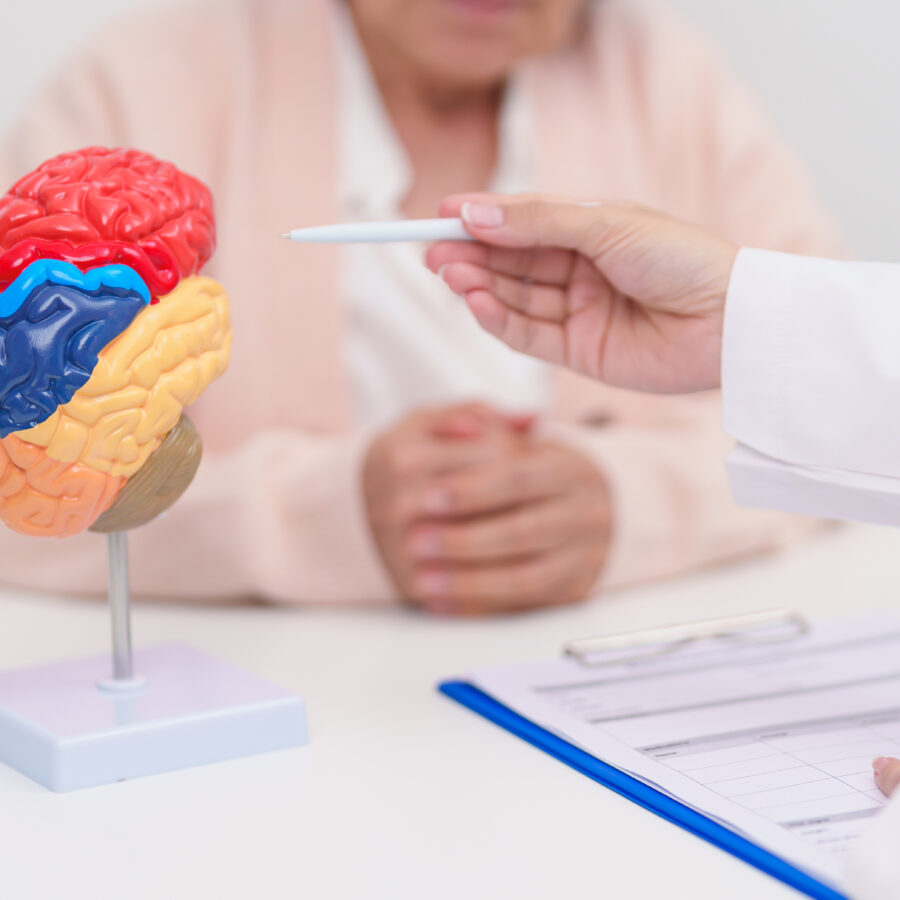
If you are 65 or older, and you have regular checkups on your heart, blood pressure and cholesterol, you are taking care of yourself quite well. However, experts suggest there may be another screening that should be incorporated: a memory loss test.
The Naturally Aging Brain
As we age, it is natural to struggle when searching for the right words, recalling names and multitasking. You might miss a monthly payment, lose things from time to time or forget what day it is, only to remember it later. And you may find that it is more difficult to pay attention when watching T.V. or when people are talking to you.
When Should You Consider a Memory Loss Test?
When your ability to remember, learn and reason interferes with your quality of life, you should consider being evaluated. This degree of impairment is not a natural part of aging.
These problems can manifest themselves in many ways, such as:
- Repeating the same question over and over again
- Problems taking care of monthly bills
- Misplacing things frequently, and being unable to find them
- Getting lost in places with which you were quite familiar
- Losing track of the date or time of year
- Having trouble following directions
- Difficulty finding the words to maintain a conversation
- Becoming more confused about time, people and places
- Eating poorly, not practicing good hygiene
- Behaving unsafely
Seniors, family members and caregivers should understand that some of these symptoms are not necessarily due to Alzheimer’s disease or some other form of dementia. Depression, an infection, a sleep disorder or side effects from medications are some of the treatable causes for cognitive difficulties.
This is why it is important for you to see your physician sooner rather than later. If the condition is treatable, you can start addressing it right away. If it is dementia, there are medications that can slow its onset, and there will be more time to make plans for care.
Some older adults have a condition called mild cognitive impairment (MCI), meaning they have more memory or other brain-related problems than other people their age. They can normally take care of themselves. Please note that MCI could be an early sign of Alzheimer’s disease, but not everyone with MCI will develop Alzheimer’s.
You should work with your physician, who may want to track any cognitive changes every six to 12 months with a screening.
What is a Memory Loss Test?
Your physician may recommend a memory screening or memory loss test. This assessment tool helps determine if you are at risk for memory problems or losing other thinking skills. It is a simple and safe tool that indicates whether an additional check up by a qualified healthcare professional is recommended. It takes about 10 to 15 minutes to complete.
The memory loss test is a face-to-face evaluation in a private setting with only the person being tested and the screener present. It involves a series of questions and/or tasks designed to test memory, language skills, thinking ability and other intellectual functions.
When completed, the screening administrator will review the results with you. The test administrator will suggest whether you should follow up with a physician or other clinician for more extensive testing.
Memory screenings are confidential. You will receive the screening results and will be asked to bring them to a follow-up appointment with a healthcare professional, or to include in your medical file.
What to Do if Your Loved One Needs Memory Support
If cognitive decline is getting in the way of your loved one’s quality of life, it may be time to consider a memory support community, such as those offered at Bethesda Dilworth and Bethesda Hawthorne Place. With a team of memory support professionals on their side, your loved one will have the support they need to maintain a positive routine and complete activities of daily living necessary to maintaining the independence they cherish. Book a tour at one of Bethesda’s memory support communities to find the right fit for your loved one.
For more information on memory loss, visit Bethesda’s Alzheimer’s and Dementia blog.
Back to All Posts